
Every organisation needs to leverage skills to adapt to the constant change that typifies the age that we currently live. It is critical to know which type of skillset and resource to leverage and when.
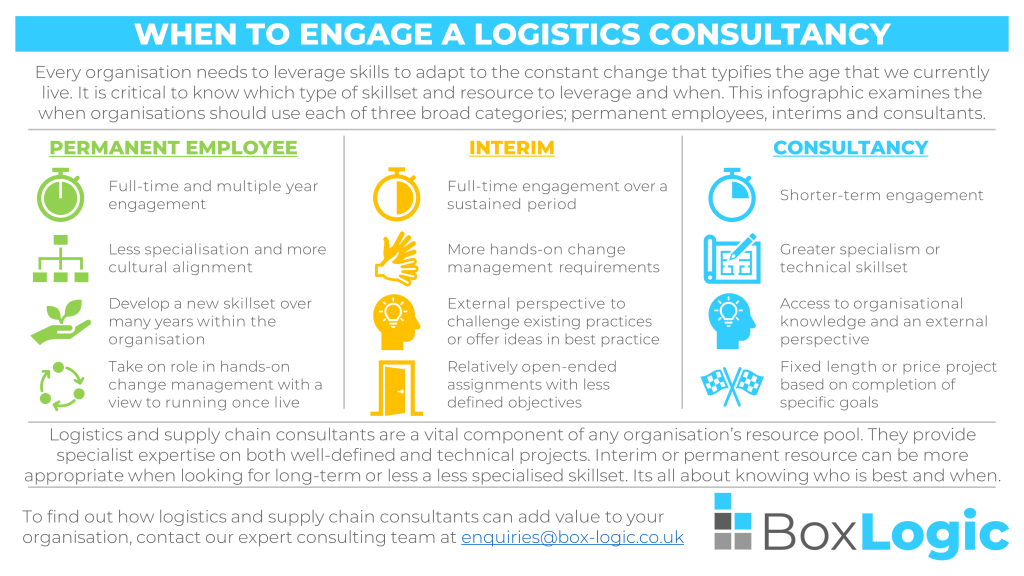
This infographic examines the when organisations should use each of three broad categories; permanent employees, interims and consultants.
Typical Types of Resource
EMPLOYEE
A permanent member of staff, employed on a full or part-time basis

Full-time and multiple year engagement

Less specialisation and more cultural alignment

Develop a new skillset over many years within the organisation

Take on role in hands-on change management with a view to running once live
INTERIM
A fixed-term contractor to supplement or backfill permanent resource

Full-time engagement over a sustained period

More hands-on change management

External perspective to challenge existing practices or offer ideas in best practice

Relatively open-ended assignments with less defined objectives
CONSULTANCY
A team of external consultants engaged to deliver specific project or objective

Shorter-term engagement

Greater specialism or technical skillset

Access to organisational knowledge and an external perspective

Fixed length or price project based on completion of specific goals
Examples of When to Use
EMPLOYEE
Analysis or management of a task, process or team
INTERIM
Deliver change management project or programme
CONSULTANCY
Evaluate the best course of action on strategy or project
Conclusion
Logistics and supply chain consultants are a vital component of any organisation’s resource pool. They provide specialist expertise on both well-defined and technical projects.
Interim or permanent resource can be more appropriate when looking for long-term or less a less specialised skillset. Its all about knowing who is best and when
To find out how logistics and supply chain consultants can add value to your organisation, contact our expert consulting team on our Contact Us page or email enquiries@box-logic.co.uk